CJC-1295 and Ipamorelin Stack: What the Research Shows
By Pepsynth Labs Editorial Team · Updated 2026-07-16
For researchers studying age-related hormonal decline, the [CJC-1295 with DAC](https://pepsynthlabs.com/product/cjc-1295-10mg/) and Ipamorelin stack has become one of the more closely watched peptide combinations in the growth hormone space. The two compounds work through separate receptor pathways rather than competing for the same signaling channel. CJC-1295 extends the hormone-releasing signal at the pituitary, while Ipamorelin, a synthetic pentapeptide and Growth Hormone Secretagogue, drives pulsatile release through a distinct, independent route. The result, according to available studies, is a measurable amplification of GH output that neither compound reliably produces on its own.
Key Takeaways
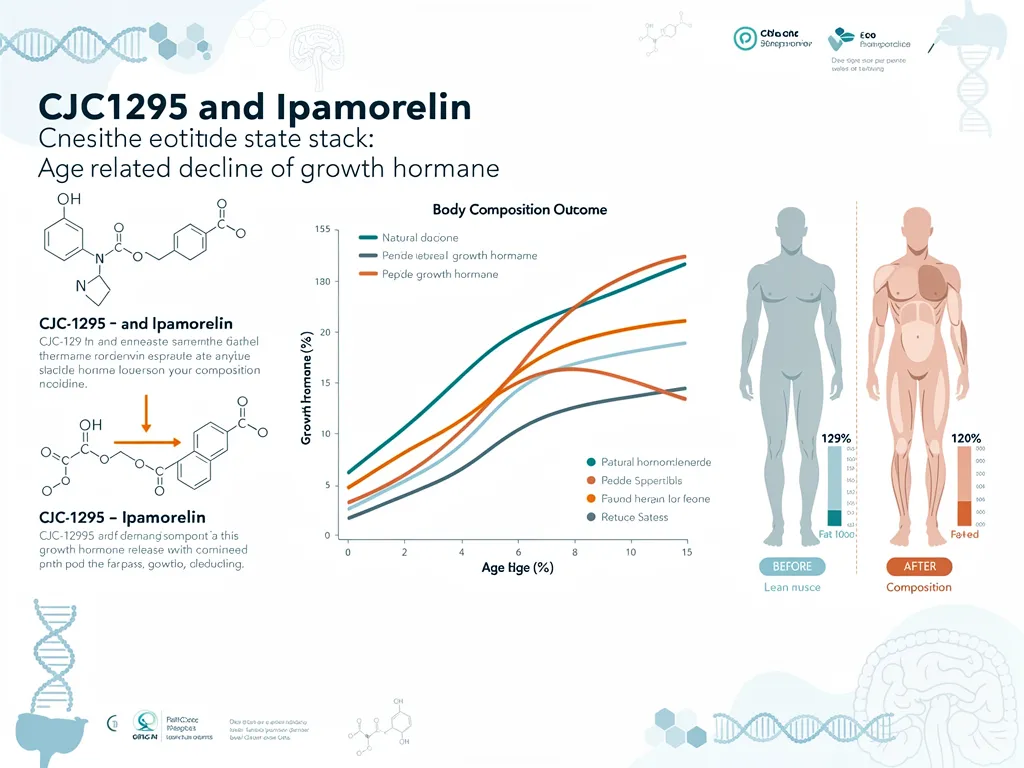
- CJC-1295 and Ipamorelin stack targets growth hormone production, which declines approximately 15% per decade after age 30.
- Research demonstrates these peptides improve physical performance and body composition in weightlifters, bodybuilders, and gym enthusiasts.
- The combination addresses multiple health areas including weight loss, immune modulation, cognitive enhancement, and recovery optimization.
- Therapeutic peptides show high potential for managing perimenopause and menopause symptoms alongside anti-aging and longevity applications.
How Do CJC-1295 and Ipamorelin Work Together?
The CJC-1295 and Ipamorelin stack engages two distinct receptor pathways simultaneously to amplify the body’s own pulsatile growth hormone output. Neither compound duplicates the other’s mechanism; each targets a separate signaling route on the pituitary gland.
CJC-1295 is a [growth hormone releasing hormone analog](https://pepsynthlabs.com/what-are-peptides-and-how-do-they-work/) that activates the GHRH receptor pathway, prompting the pituitary to release growth hormone through its natural signaling channel. Ipamorelin growth hormone research, including the foundational Ipamorelin Raun 1998 study, classifies the compound as a synthetic pentapeptide and a growth hormone secretagogue, formally designated a GHS. [Ipamorelin ghrelin receptor](https://pepsynthlabs.com/product/ipamorelin-5mg-10mg/) binding is the mechanism at work: the peptide targets Growth Hormone Secretagogue receptors on the pituitary gland, potentially stimulating growth hormone release through a pathway entirely separate from GHRH.
Why Does Dual-Pathway Activation Matter for Research?
The CJC-1295 Ipamorelin combination is studied precisely because it pairs a GHRH peptide research compound with a ghrelin-mimetic agent. This pairing, a GHRH-plus-ghrelin-mimetic approach, is the basis of CJC-1295 Ipamorelin research into amplified, pulsatile GH output. Single-pathway stimulation leaves the second receptor system untouched.
What Is the Difference Between the Two Receptor Pathways?
The GHRH pathway responds to CJC-1295 without DAC as a growth hormone releasing hormone analog. The ghrelin pathway responds to ipamorelin as a growth hormone secretagogue research target. Together, the **CJC-1295 Ipamorelin blend** represents a dual-axis model for [peptide research for laboratory use](https://pepsynthlabs.com/research-peptides-frequently-asked-questions/) investigating GH secretion dynamics.

What Does Published Research Actually Reveal?
Published research has established the individual pharmacology of both compounds in human trials. No randomized controlled trials of the CJC-1295 and Ipamorelin stack as a combined intervention exist as of April 2026. Researchers working in GHRH peptide research. growth hormone secretagogue research therefore draw on separate bodies of evidence for each agent.
The physiological rationale runs deeper than a single statistic. Ipamorelin growth hormone studies and CJC-1295 Ipamorelin research both center on a well-documented biological problem: growth hormone output drops roughly 15% per decade after age 30. By middle age, that cumulative deficit shows up in measurable ways: shifts in body composition, disrupted sleep architecture, and slower recovery from physical stress. Sinha et al. 2020 documented body composition benefits of growth hormone secretagogues as an adjunctive approach in populations with hormonal deficits, adding clinical weight to what earlier preclinical work had suggested.
What the research picture actually looks like, taken as a whole, is this: the individual pharmacology of each compound is reasonably well established; the synergistic behavior of the two together is not. For CJC-1295, human trial data shows clear, sustained GH and IGF-1 elevation. For Ipamorelin, the foundational work confirmed selectivity: it stimulates GH release without the cortisol and prolactin spikes seen with earlier secretagogues. That said, most of that work was done in animal models. The leap from “each compound works through a distinct pathway” to “combining them produces additive or synergistic output” is a logical inference that the preclinical data supports, not a conclusion that controlled human trials have yet confirmed. That gap is exactly what makes this stack a productive area for structured laboratory research.
Why Does Growth Hormone Decline Matter for Research?
The 15% per-decade reduction in endogenous growth hormone output provides the core rationale for CJC-1295 IGF-1 study designs, including the landmark Teichman 2006 CJC-1295 human trial, which recorded GH increases of 2–10× and IGF-1 increases of 1.5–3× sustained over 6–11 days. Ionescu and Frohman 2006 further characterized CJC-1295’s ability to sustain pulsatile GH secretion, while Alba et al. 2006 demonstrated in GHRH-knockout models that lean mass was preserved without accompanying fat gain. CJC-1295 functions as a growth hormone releasing hormone analog, stimulating the pituitary to increase natural growth hormone output rather than introducing exogenous hormone directly.
What Is the Regulatory Status of These Compounds?
As of April 2026, both CJC-1295 and Ipamorelin appear on the FDA 503A Category 2 bulk substances list. Neither compound carries FDA approval for any indication. The CJC-1295 Ipamorelin blend and its individual components are therefore classified strictly as materials for peptide research for laboratory use, not for clinical or consumer application.
The four studies most cited in CJC-1295 Ipamorelin research span different compounds, populations, and designs. Reading them side by side makes the evidence picture, including its gaps, considerably clearer:
Where Can Researchers Source Verified Peptide Materials?
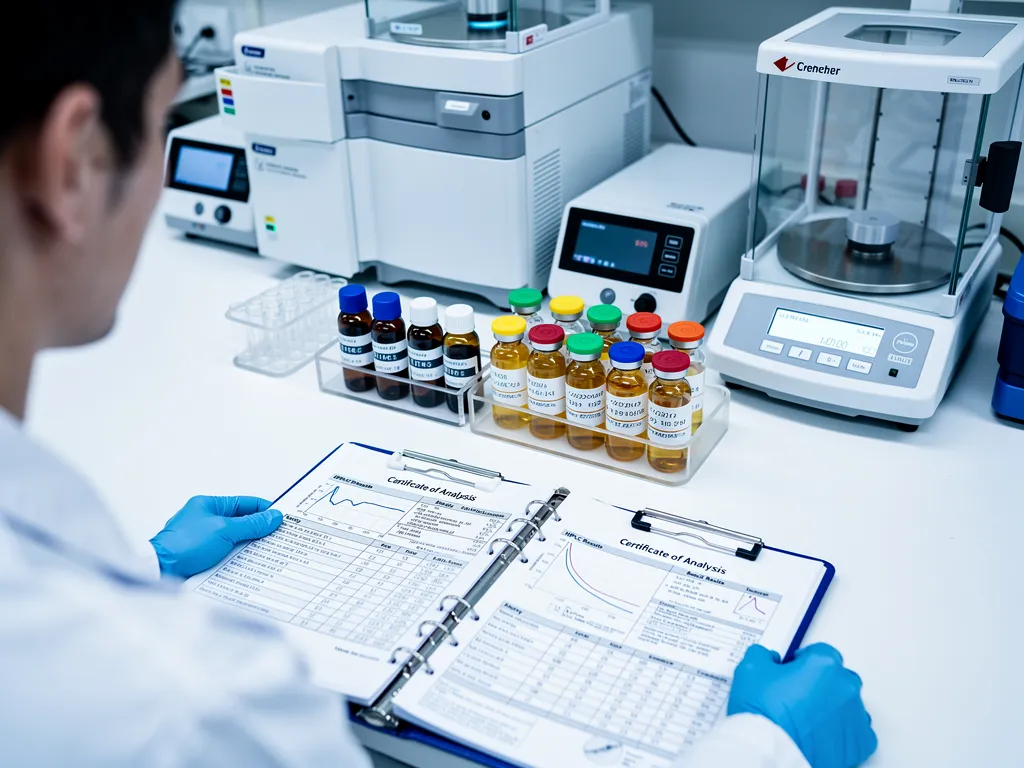
Pepsynth Labs supplies research-grade peptides from a U.S.-based facility in Cheyenne, WY, focused exclusively on materials intended for laboratory research use only. Every batch undergoes independent third-party analysis confirming greater than 98% purity, with Certificates of Analysis available for full documentation transparency.
Researchers who depend on the CJC-1295 and Ipamorelin stack for peptide research for laboratory use cannot afford inconsistent sourcing. Contaminated or underdocumented materials compromise experimental validity and waste resources that cannot be recovered.
What Quality Standards Should Researchers Expect From a Peptide Supplier?
Pepsynth Labs aligns production with cGMP standards and ships all compounds in lyophilized powder form, a format that maintains compound integrity through transit and long-term storage, which matters for CJC-1295 Ipamorelin research and GHRH peptide research where reproducibility is non-negotiable.
What Fulfillment and Guarantee Terms Does Pepsynth Labs Offer?
Pepsynth Labs provides same-day weekday fulfillment for orders placed before the posted cutoff. Free U.S. shipping applies to orders over $200. A 30-day money-back guarantee reduces procurement risk for research teams evaluating new suppliers.
What Pepsynth Labs provides with every order:
- ≥98% purity confirmed by independent third-party analysis
- Certificates of Analysis provided with every batch
- Lyophilized powder form for shipping and storage stability
- cGMP-aligned domestic U.S. manufacturing
- 30-day money-back guarantee on orders
The current body of research on CJC-1295 and Ipamorelin combination therapy remains limited in peer-reviewed human studies, with most evidence derived from preclinical models and animal investigations. A 2026 review by Dominikowski et al. in Frontiers in Endocrinology specifically identifies this evidence gap, underscoring the need for controlled human trials. Researchers pursuing this stack need solid experimental design, thorough documentation, and strict adherence to institutional protocols. Controlled laboratory work remains the clearest path to building a reliable evidence base for this peptide combination.
FAQ
Does published research confirm the CJC-1295 and Ipamorelin stack works as a combined intervention?
The short answer is: not yet, and that absence is itself meaningful. The field has solid individual-compound data (Teichman 2006 for CJC-1295, Raun 1998 for Ipamorelin), but no trial has enrolled human subjects to test the two together under controlled conditions. That gap means every claim about synergistic output remains a well-supported inference, not a confirmed result. For researchers, that distinction matters: it defines exactly where the next productive study designs should focus.
Why do researchers study these two peptides together?
CJC-1295 activates the GHRH receptor pathway while Ipamorelin targets Growth Hormone Secretagogue receptors, engaging two distinct pathways simultaneously. Single-pathway stimulation leaves the second receptor system untouched.
What biological problem does this peptide stack address?
After age 30, endogenous GH output drops progressively. By middle age, that deficit measurably affects body composition, sleep quality, and recovery. This makes GH-axis peptides a research focus for understanding how to study and potentially address age-related hormonal decline in controlled laboratory settings.
Conclusion
The research picture on CJC-1295 and Ipamorelin is more nuanced than most peptide resources acknowledge. Each compound has a reasonably well-established individual pharmacology: CJC-1295 produces sustained, measurable GH and IGF-1 elevation through the GHRH receptor pathway, and Ipamorelin selectively stimulates GH release through the ghrelin receptor without the cortisol and prolactin side effects seen with earlier secretagogues. The scientific rationale for combining them is solid. What the literature has not yet provided is a controlled human trial testing the two together, and that gap matters for anyone drawing conclusions from the current evidence base.
For researchers, that is not a reason to set this combination aside. It is a reason to approach it carefully, with rigorous experimental design, thorough documentation, and sourcing standards that do not introduce variables the research cannot account for. Purity, batch consistency, and verified Certificates of Analysis are not administrative formalities in this context. They are conditions for producing results that hold up.
The next productive step in this area is a well-designed, placebo-controlled human trial examining the combined stack. Until that data exists, the individual study findings from Teichman 2006, Raun 1998, Alba 2006, and Sinha 2020 remain the most reliable anchors for understanding what this peptide combination can and cannot be said to do.
Frequently Asked Questions
Does published research confirm the CJC-1295 and Ipamorelin stack works as a combined intervention?
Not yet, and that absence is itself meaningful. The field has solid individual-compound data (Teichman 2006 for CJC-1295, Raun 1998 for Ipamorelin), but no trial has enrolled human subjects to test the two together under controlled conditions. That gap means every claim about synergistic output remains a well-supported inference, not a confirmed result. For researchers, that distinction matters: it defines exactly where the next productive study designs should focus.
Why do researchers study these two peptides together?
CJC-1295 activates the GHRH receptor pathway while Ipamorelin targets Growth Hormone Secretagogue receptors, engaging two distinct pathways at the same time. Single-pathway stimulation leaves the second receptor system untouched, which is why the dual-pathway combination is considered a more complete model for studying GH secretion dynamics.
What biological problem does this peptide stack address?
After age 30, endogenous GH output drops progressively. By middle age, that deficit measurably affects body composition, sleep quality, and recovery. This makes GH-axis peptides a research focus for understanding how to study and potentially address age-related hormonal decline in controlled laboratory settings.
What is the difference between CJC-1295 with DAC and CJC-1295 without DAC?
The Drug Affinity Complex (DAC) modification extends the half-life of CJC-1295 significantly, allowing it to sustain elevated GH and IGF-1 levels over several days from a single administration. The version without DAC has a shorter activity window, producing a more pulsatile release pattern. Researchers choose between them based on the duration and release profile their study design requires.
Why does purity matter so much when sourcing peptides for research?
Peptide degradation, contamination, or undocumented excipients can confound dose-response data and make results difficult to reproduce or interpret. For GH-axis peptides in particular, where the compounds are active at very low concentrations, even minor impurities can introduce variables the study cannot account for. Independent third-party Certificates of Analysis are the standard way to verify that sourced materials meet the purity threshold the research requires.