3 Best Peptide Stacks Based on Research:
And Why Researchers Keep Studying Them
By Halim Rodriguez
Editorial note: This article is for educational purposes only. It summarizes published research and clearly labels anecdotal reports where included. It is not medical advice.
When people search for the “best peptide stack,” they usually find one of two things: a generic sales page full of vague claims or a forum thread full of personal opinions. Neither gives a clear picture of what the research actually says.
A better approach is to ask a more precise question: which peptide combinations keep showing up in serious research conversations, and why? That is the purpose of this article. Rather than chasing hype, this guide looks at three peptide stacks that stand out because the biology behind them is compelling, the individual compounds have attracted meaningful research interest, and the combinations themselves keep resurfacing in advanced peptide discussions. Just as importantly, this article distinguishes between human evidence, preclinical evidence, mechanistic rationale, and anecdotal use, because those are not the same thing. Source
Quick Answer
The three peptide stacks that stand out most based on current research interest are Retatrutide+ MOTS-c for metabolic research, BPC-157+ TB-500+ GHK-Cu for recovery-focused and tissue-remodeling research, and CJC-1295+ Ipamorelin for growth-hormone-support research. What makes these stacks interesting is not just popularity, but the way each combines compounds with complementary mechanisms. At the same time, the strongest evidence usually exists for the individual peptides, not always for the exact stack in large human combination trials. Source Source SourceSource
Evidence at a Glance
The most important takeaway is that the evidence across these stacks is not all the same quality. Retatrutide has the strongest human evidence in this article as an individual compound. MOTS-c has compelling metabolic literature but less direct human stack evidence. BPC-157, TB-500, and GHK-Cu have strong mechanistic appeal but much of the published support is preclinical or review-based. CJC-1295 and Ipamorelin have meaningful human data individually on GH-related signaling, but broader claims about the exact commercialized stack often go beyond what has been directly proven in human outcome studies. Source Source Source
1) Retatrutide + MOTS-c: the metabolic stack with the broadest upside

If one peptide combination feels bigger than a simple “fat loss stack,” it is this one. Retatrutide has drawn major attention because the published human data points to more than weight reduction alone. In the phase 2 obesity trial published in The New England Journal of Medicine, the researchers reported substantial weight loss over 48 weeks and wrote that “treatment with retatrutide was associated with improvements in cardiometabolic measures… including systolic and diastolic blood pressure and levels of glycated hemoglobin, fasting glucose, insulin, and lipids.” They also reported that “72% of the participants who had prediabetes at baseline in the retatrutide groups had reverted to normoglycemia” by week 48. The abstract conclusion itself is straightforward: “In adults with obesity, retatrutide treatment for 48 weeks resulted in substantial reductions in body weight.” Source Source
MOTS-c adds a different but complementary angle. In the original Cell Metabolism paper, the researchers described MOTS-c as a mitochondrial-derived peptide that “regulates insulin sensitivity and metabolic homeostasis.” They also reported that “MOTS-c treatment in mice prevented age-dependent and high-fat-diet-induced insulin resistance, as well as diet-induced obesity.” Later review literature helps explain why MOTS-c continues to attract interest in metabolic research: “MOTS-c has been shown to target the skeletal muscle and enhance glucose metabolism.”Source Source
What makes this pairing attractive is the way the two compounds seem to occupy different layers of the metabolic conversation. Retatrutide has strong human evidence around body weight and cardiometabolic markers, while MOTS-c has been studied for mitochondrial signaling, skeletal-muscle glucose handling, and insulin sensitivity. That does notmean there is already robust human trial evidence on the exact combination. It means the mechanistic fit is unusually strong, which is why this stack keeps showing up in more advanced peptide discussions. Source Source Source
Why this stack stands out
This stack stands out because it combines one of the strongest human obesity-trial signals in this article with one of the more interesting mitochondrial/metabolic research peptides. For readers interested in the overlap between body composition, glucose metabolism, and broader metabolic function, this is probably the most compelling stack in the group. Source Source
Evidence level
- Human evidence on exact stack: limited
- Human evidence on retatrutide individually: strong
- Mechanistic and preclinical support for MOTS-c: meaningful
- Best fit: metabolic research, body weight, glucose handling, insulin-sensitivity interest
Research quotes you can hyperlink
“Treatment with retatrutide was associated with improvements in cardiometabolic measures…”URL: https://www.nejm.org/doi/full/10.1056/NEJMoa2301972
“At week 48, 72% of the participants who had prediabetes at baseline in the retatrutide groups had reverted to normoglycemia…”URL: https://www.nejm.org/doi/full/10.1056/NEJMoa2301972
“In adults with obesity, retatrutide treatment for 48 weeks resulted in substantial reductions in body weight.”URL: https://pubmed.ncbi.nlm.nih.gov/37366315/
“MOTS-c treatment in mice prevented age-dependent and high-fat-diet-induced insulin resistance, as well as diet-induced obesity.”URL: https://pubmed.ncbi.nlm.nih.gov/25738459/
“MOTS-c has been shown to target the skeletal muscle and enhance glucose metabolism.”URL: https://pubmed.ncbi.nlm.nih.gov/27216708/
What users say online
Anecdotal only — not clinical evidence
“Retatrutide is amazing. No pain at injection, no side effects thus far except for some minor strength loss and occasional nausea…”URL: https://www.reddit.com/r/Biohackers/comments/1s7edjy/before_and_after_reta_motsc_first_time_with/
“TLDR2: Mots-c reports huge improvement in stamina…”URL: https://www.reddit.com/r/Biohackers/comments/1s7edjy/before_and_after_reta_motsc_first_time_with/
2) BPC-157 + TB-500 + GHK-Cu: the recovery-focused stack built on angiogenesis, migration, and tissue remodeling
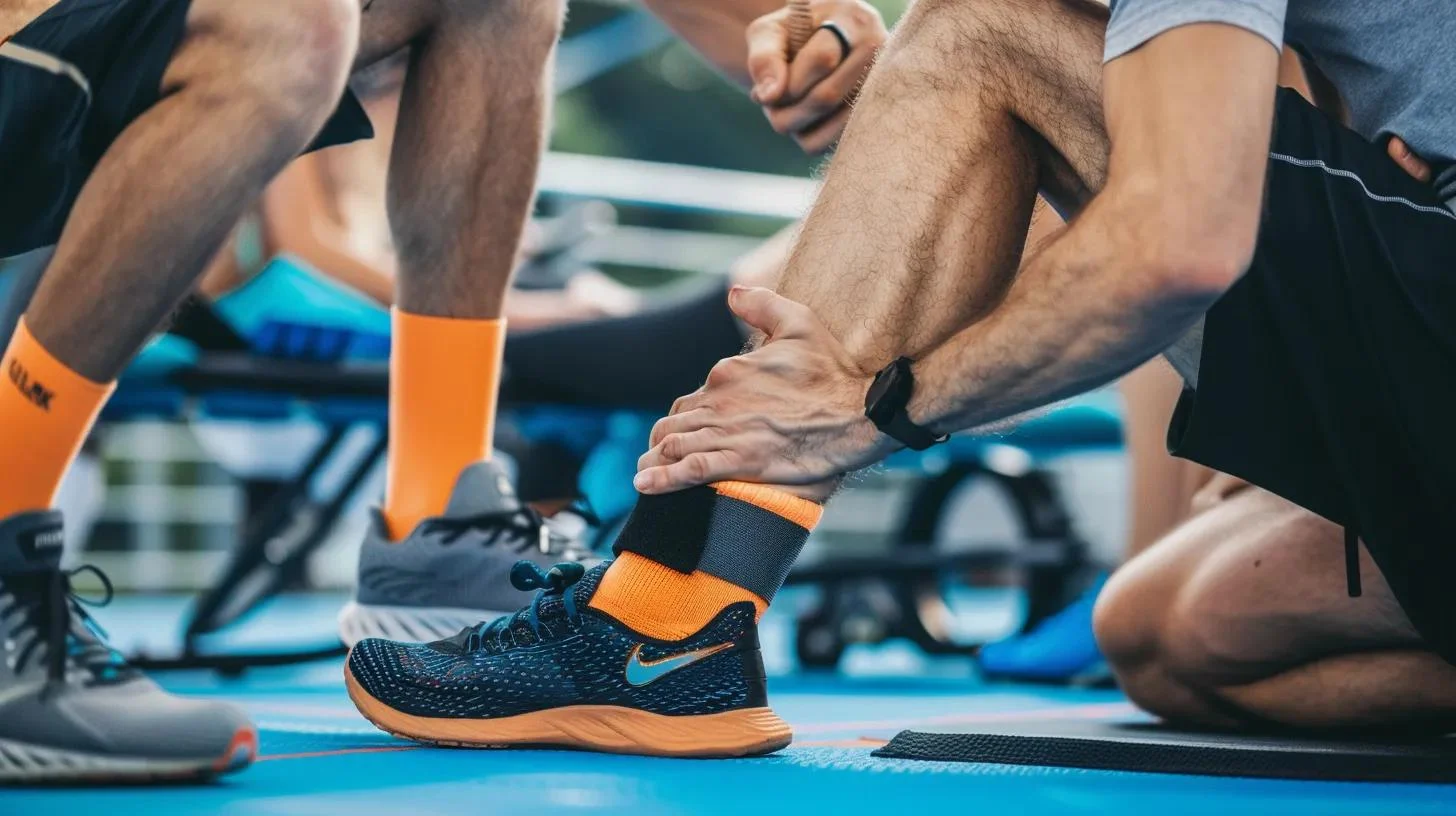
This is the stack that often gets called the “Wolverine Stack,” but the nickname can be misleading if it makes the evidence sound more definitive than it really is. The better way to understand this combination is as a mechanistically appealing recovery stack built from three overlapping themes: angiogenesis, tissue-repair signaling, and connective-tissue remodeling. Source Source
BPC-157 is usually the angiogenesis-and-repair piece of the stack. In a study on muscle and tendon healing, the authors wrote that “Pentadecapeptide BPC 157 promotes healing demonstrating particular angiogenic/angiomodulatory potential.” They further concluded that its activity appears tied to “stimulating angiogenesis by up-regulating VEGF expression.” At the same time, more recent reviews stress that enthusiasm should be tempered by the evidence base: “BPC-157 demonstrates robust regenerative and cytoprotective effects in preclinical studies” but “there is minimal human data available.” Source Source
TB-500 needs to be described carefully. TB-500 is not thymosin beta-4 itself. A recent orthopaedics review states that “TB-500 is a synthetic peptide fragment derived from thymosin beta-4 (Tβ4)” and explains that the active segment is associated with actin polymerization, progenitor-cell recruitment, and enhanced cellular migration. A 2026 sports medicine primer similarly refers to “TB-4 and its derivative TB-500” and notes that both promoted angiogenesis and tissue repair in preclinical models, while also emphasizing that human orthopaedic data are lacking. Source Source
That distinction matters because some of the classic wound-healing literature in this space is on thymosin beta-4, not directly on TB-500. For example, a wound-healing study on thymosin beta-4 reported that “increased collagen deposition and angiogenesis were observed in the treated wounds” and concluded that “Tbeta4 is a potent wound healing factor with multiple activities.” That study is useful for understanding the broader biology behind why TB-500 is discussed, but it should not be presented as if it were direct human evidence on TB-500 itself. Source Source
GHK-Cu adds the connective-tissue remodeling dimension that makes this stack feel more complete. The literature around GHK-Cu includes fibroblast activity, collagen-related processes, and wound-healing models. One paper states that “GHK-Cu stimulates wound healing in numerous models and in humans.” Another review notes that “GHK stimulates synthesis of collagen, selected glycosaminoglycans and small proteoglycan decorin.” A newer sports medicine review, however, also reminds readers that “no clinical data support its use for musculoskeletal conditions.”Source Source Source
A recent orthopaedics review does the best job of summarizing why these peptides keep getting discussed together. It states that “Wound-healing peptides such as BPC-157, TB-500, and GHK-Cu promote angiogenesis, integrin-mediated extracellular matrix remodeling, and fibroblast activation.” It also adds that peptides in this category influence integrin-FAK signaling and eNOS-driven nitric oxide release, both of which are relevant to revascularization and immune modulation. That is probably the clearest mechanistic explanation for the stack’s continued popularity. Source
Why this stack stands out
This stack stands out not because large human trials have already proven the exact triple combination, but because the mechanistic complementarity is easy to understand. BPC-157 is typically discussed for angiogenesis and repair-related signaling. TB-500 is a synthetic thymosin beta-4-derived fragment, usually discussed in relation to migration and tissue-repair biology. GHK-Cu contributes fibroblast activation, matrix remodeling, and collagen-related support. Together, they create a very strong research rationale for recovery-focused interest, even though direct human evidence on the exact stack remains limited. Source Source Source Source
Evidence level
- Human evidence on exact stack: limited
- Preclinical and mechanistic rationale: strong
- Direct human orthopaedic evidence for TB-500: lacking
- Direct clinical musculoskeletal evidence for GHK-Cu: lacking
- Best fit: recovery-oriented research, angiogenesis, tissue-repair signaling, connective-tissue remodeling
What users say online
Anecdotal only — not clinical evidence
“I noticed big benefits from bpc157 and tb500 combo, for one, my meniscus healed and my knees no longer hurt.”URL: https://www.reddit.com/r/Peptides/comments/1gaoc0j/looking_to_use_bpc_157_tb_500_and_ghkcu/
“It works very well for healing the actual injuries and I personally notice a pain reduction while on the cycle…”URL: https://www.reddit.com/r/Peptides/comments/1gaoc0j/looking_to_use_bpc_157_tb_500_and_ghkcu/
3) CJC-1295 + Ipamorelin: the classic GH-support stack
Some peptide stacks come and go, but CJC-1295 plus Ipamorelin has stayed in the conversation for years because the logic behind it is easy to understand. CJC-1295 is a long-acting growth hormone-releasing hormone analog studied for sustained GH and IGF-1 support. In a human study, the researchers concluded that “Subcutaneous administration of CJC-1295 resulted in sustained, dose-dependent increases in GH and IGF-I levels in healthy adults and was safe and relatively well tolerated.” They also noted that “There was evidence of a cumulative effect after multiple doses.”A second study found that “CJC-1295 increased trough and mean GH secretion and IGF-I production with preserved GH pulsatility.” Source Source
Ipamorelin fills the other half of the stack. In healthy volunteers, researchers found that “The time course of GH stimulation by ipamorelin showed a single episode of GH release with a peak at 0.67 hours” and that “Ipamorelin induces the release of GH at all dose levels.” That makes it easy to see why the pairing became so common: CJC-1295 is associated with a more sustained GH/IGF-1 environment, while Ipamorelin is associated with a GH-release pulse. Source Source
The key accuracy point here is that the strongest human evidence supports the individual GH-related effects of these peptides, not every broader claim people make online about the exact stack. A recent sports medicine primer notes that “CJC-1295 combined with ipamorelin showed significantly improved maximum tetanic tension in murine models with glucocorticoid-induced muscle loss, but these findings are limited to animal studies.” So while the mechanistic rationale is strong, claims around body composition, sleep, or recovery should still be framed carefully unless they are directly tied to specific evidence. Source Source Source
Why this stack stands out
Of the three stacks in this article, this one may be the most intuitively understandable. One peptide supports sustained GH/IGF-1 signaling, and the other induces GH release. That is why CJC-1295 plus Ipamorelin remains one of the most talked-about peptide pairings in GH-support research circles. The mechanism is clear, and the individual-compound data is meaningful, even if the most ambitious claims made online still go beyond what has been fully established in human outcome trials. Source Source Source
Evidence level
- Human evidence on exact stack outcomes: limited
- Human evidence on individual GH-related signaling: meaningful
- Combination evidence in animal context: present, but limited
- Best fit: GH/IGF-1 research, recovery interest, classic peptide-pairing rationale
What users say online
Anecdotal only — not clinical evidence
“I can go harder in the gym and not feel like a zombie the next day. The DOMS is significantly reduced.”URL: https://www.reddit.com/r/Biohackers/comments/1r10pbq/2_months_on_cjc1295_no_dac_ipamorelin_the/
Which peptide stack is “best”?
That depends on what “best” means. If the focus is metabolic research and body-weight-related outcomes, Retatrutide+ MOTS-c is probably the most exciting stack in this group. If the focus is recovery-oriented mechanisms, connective tissue, and tissue remodeling, BPC-157+ TB-500+ GHK-Cu is the most comprehensive from a mechanistic standpoint. If the interest is GH-support logic and one of the most established pairings in peptide discussions, CJC-1295+ Ipamorelin still deserves its reputation. Source Source Source
Final Takeaway
The best peptide content is not the loudest content. It is the content that tells readers what is actually supported, what remains mechanistic, and where anecdote begins. That is especially important in a category where forum culture, product marketing, and emerging research often get blended together too casually.
That is why these three stacks continue to come up. Not because every claim about them has already been proven in large human trials, but because the individual peptides and their mechanisms keep giving serious readers a reason to pay attention. For readers exploring research peptides and wanting to go deeper into these categories, visit the Pepsynth Labs Shop to browse current offerings and continue your own research. Source
FAQ Section
Is there direct human research on stacking Retatrutide with MOTS-c?
The strongest evidence currently comes from the compounds individually rather than from a major published human trial on the exact stack. Retatrutide has strong human obesity-trial data, while MOTS-c has compelling metabolic and skeletal-muscle literature that helps explain the pairing’s appeal. Source Source
Is TB-500 the same thing as thymosin beta-4?
No. TB-500 is not thymosin beta-4 itself. A recent review describes TB-500 as “a synthetic peptide fragment derived from thymosin beta-4 (Tβ4).” Some of the broader wound-healing literature in this category comes from thymosin beta-4 research, which may help explain interest in TB-500, but it should not be treated as identical evidence. Source Source
Which stack has the strongest human evidence for weight loss?
Of the stacks covered here, the strongest human evidence is tied to Retatrutide. The phase 2 obesity trial published in NEJM reported substantial reductions in body weight over 48 weeks. Source
What is the “Wolverine Stack”?
In peptide communities, that nickname usually refers to BPC-157+ TB-500, sometimes expanded with GHK-Cu when the conversation shifts toward connective-tissue remodeling and collagen-related support. The nickname is informal; the research conversation is more about angiogenesis, migration, fibroblast activity, and extracellular-matrix remodeling. Source
Is CJC-1295 + Ipamorelin proven to build muscle?
The best available studies support effects on GH and IGF-1 signaling, which is why the pairing remains popular. Stronger claims around muscle gain, fat loss, sleep, or recovery are often partly inferred from mechanism, animal data, or anecdotal discussion rather than fully established in robust human outcome trials of the exact stack. Source Source Source
Are Reddit reports useful?
They can be useful for understanding how peptide users talk about stacks and why certain combinations become popular, but they are not clinical evidence. On health-adjacent topics, anecdotal reports should always be clearly separated from published research. Source