
Research Peptide Supplier — USA-Based, Lab-Tested Synthetic Peptides You Can Trust
High-quality synthetic peptides are now central to many areas of scientific research — from drug discovery to mechanistic biology. This article explains what to look for in a reliable USA supplier of research peptides, focusing on the standards and practices that protect experimental integrity. Sourcing from an established, lab-tested vendor like Pepsynth Labs reduces risk and saves time; below we outline the regulatory context, typical specifications, how purchasing works, and common scientific uses for high-purity peptides.
What Makes a USA-Based Research Peptide Supplier Reliable?
A dependable USA supplier demonstrates consistent quality control, clear documentation, and a history of satisfied customers. Key indicators include rigorous testing regimes, transparent sourcing and manufacturing details, and adherence to regulatory expectations for research-only materials. These elements help researchers verify that the peptides they order will perform predictably in experiments and that any supporting data is traceable.
Still, the field faces broader hurdles around standardizing detection and quality assurance, which can affect inter-lab consistency and clinical translation.
Peptide Detection Challenges & Quality Assurance
Proteomic liquid chromatography–mass spectrometry (LC-MS) is increasingly used to identify disease-linked proteins and peptides in clinical diagnostics. Yet reliably detecting disease-associated peptides remains difficult in practice. Variation in results stems partly from a lack of standardized reference materials and unified clinical guidelines for proteomic testing. Additionally, many proteomic pipelines have not been fully validated through external quality assurance (EQA) programs.
Liquid chromatography-high resolution mass spectrometry for peptide drug quality control, A Gucinski, 2015
How Pepsynth Labs Verifies Peptide Purity and Quality
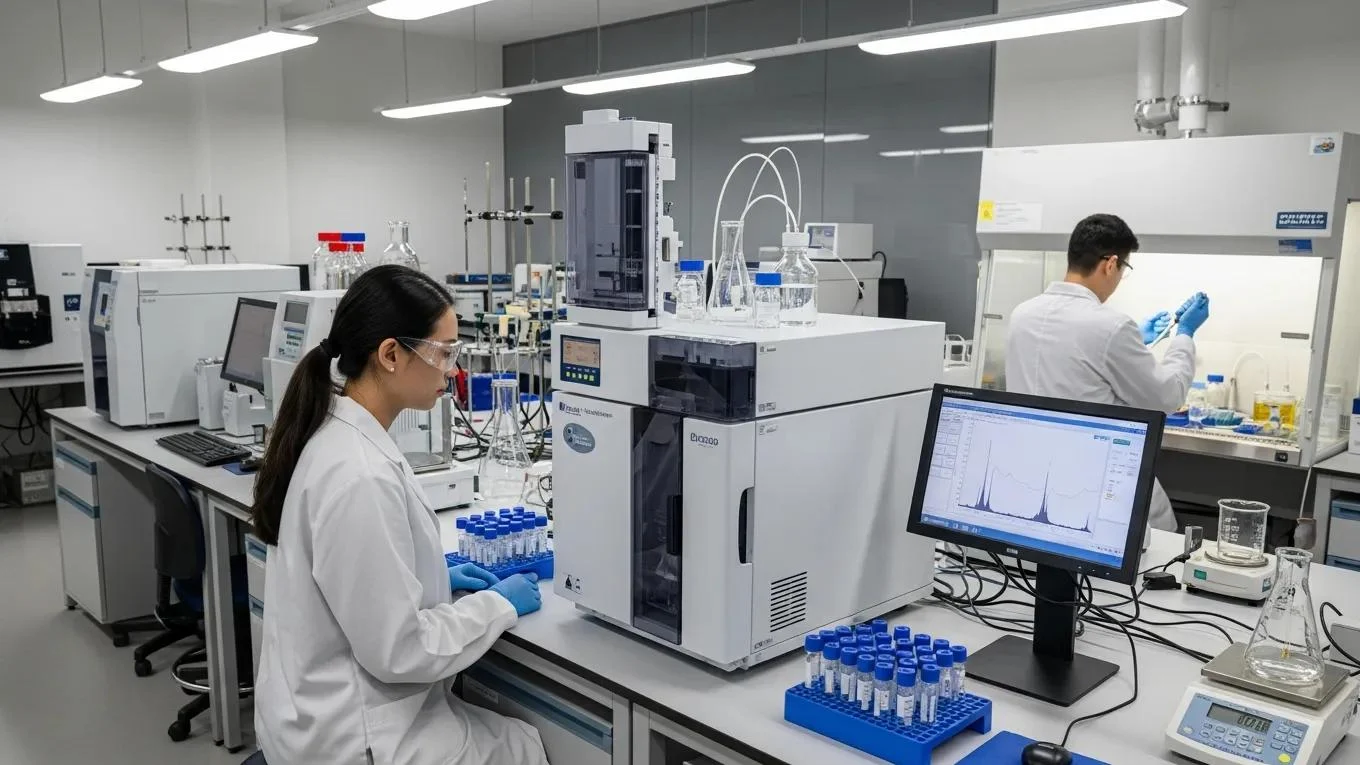
Pepsynth Labs applies a multi-stage quality framework: controlled sourcing of raw materials, validated synthesis workflows, and layered analytical testing. Every batch undergoes HPLC and orthogonal analyses as appropriate, with results documented and tied to a Certificate of Analysis. This approach helps ensure peptides meet stated purity specifications and behave consistently in downstream assays.
Which Regulatory Standards Apply to Synthetic Peptides in the USA?
In the United States, synthetic peptides supplied for laboratory research must be marketed and documented as research-use-only (RUO) materials. Suppliers follow recordkeeping and labeling conventions that distinguish research reagents from clinical or therapeutic products. Compliance with these standards preserves supplier credibility and helps researchers meet institutional and regulatory expectations when using peptides in preclinical work.
Specifications and Purity Standards for Research Peptides
Research-grade peptides are defined by clear acceptance criteria: minimum purity thresholds, validated testing methods, and complete documentation for each lot. A common industry benchmark is >95% purity verified by HPLC, supported by a Certificate of Analysis that lists testing methods and results. These controls let researchers interpret experimental outcomes with confidence.
High-Performance Liquid Chromatography (HPLC) remains a cornerstone technique for isolating and confirming peptide purity to meet those standards.
HPLC for Peptide Isolation & Purification
Over the past 25 years, high-performance liquid chromatography (HPLC) has proven adaptable for isolating and purifying peptides of varying source, scale, and complexity. The major HPLC modes used for peptides include size-exclusion, ion-exchange, and reversed-phase; mixed-mode approaches, such as combined hydrophilic interaction/cation-exchange, can extend purification options.
HPLC analysis and purification of peptides, Y Chen, 2007
The table above summarizes the core specifications researchers should expect: a stated minimum purity, HPLC-based verification, and an accompanying Certificate of Analysis for traceability.
For deeper impurity profiling and sequence confirmation, advanced workflows such as liquid chromatography–high resolution mass spectrometry (LC-HRMS) provide comprehensive, single-experiment assessment of peptide composition and related impurities.
LC-HRMS for Peptide Drug Quality Control
An LC-HRMS approach was developed and evaluated using model peptide drugs (salmon calcitonin, bivalirudin, and exenatide) to test its suitability for peptide product quality monitoring. LC-HRMS can determine amino acid composition, confirm sequence, and quantify impurities — even co-eluting species — within a single run. This makes LC-HRMS a powerful tool for peptide quality control and impurity characterization.
Liquid chromatography-high resolution mass spectrometry for peptide drug quality control, A Gucinski, 2015
How Researchers in the USA Can Purchase Lab-Tested Synthetic Peptides
Researchers in the USA can source lab-tested peptides from specialized suppliers, distributors, or academic reagent providers. When evaluating vendors, prioritize documented quality, clear lot information, and responsive technical support. Pepsynth Labs positions itself as a trusted source by combining validated analytics with transparent documentation and customer service tailored to laboratory workflows.
To make procurement straightforward, follow these practical steps:
- Identify Needs: Define the exact sequence, quantity, and purity required for your experiments.
- Select a Vendor: Choose a supplier with clear QC data, consistent delivery, and peer references.
- Place an Order: Complete the vendor’s ordering flow, confirm specifications, and request the Certificate of Analysis with shipment.
Ordering Process for Research Peptides at Pepsynth Labs
Pepsynth Labs keeps ordering direct and transparent. Browse product listings for detailed sequences and specifications, add items to your order, and provide shipping and billing details through the online portal. Accepted payment methods and shipping options are listed at checkout, and each shipment is accompanied by lot-specific documentation to support reproducibility.
Shipping Policies That Protect Peptide Integrity
Pepsynth Labs works with vetted carriers and packages peptides to preserve stability during transit. Shipping options include expedited services for time-sensitive materials; larger orders may qualify for complimentary shipping. These policies aim to ensure peptides arrive in condition and on schedule so labs can proceed without delay.
Scientific Applications for High-Purity Synthetic Peptides

High-purity peptides are versatile reagents used across drug discovery, receptor biology, immunology, and biomarker research. They enable targeted studies of protein interactions, epitope mapping, functional assays, and therapeutic candidate screening. Reliable peptide materials are essential when experiment reproducibility and interpretability are required.
How Peptides Enable Advanced Scientific Research
Peptides give researchers precise control over molecular probes and experimental variables, improving reproducibility and enabling mechanistic insights. Because they can mimic active regions of proteins or serve as specific ligands, peptides are valuable tools for dissecting pathways, validating targets, and developing assay reagents — particularly in metabolic and signaling studies where specificity matters.
Case Studies: Effective Uses of Research Peptides
Numerous studies illustrate peptide utility: targeted peptides designed to disrupt tumor pathways, peptide antigens used to raise specific immune responses, and peptide fragments employed in structure–function analyses. These examples demonstrate how well-characterized, high-purity peptides contribute to reproducible results and meaningful scientific advances.
Choosing a reliable supplier like Pepsynth Labs helps ensure the materials behind your experiments are consistent, well-documented, and supported by appropriate quality data — a practical step toward more dependable research outcomes.